
Record: The Power Line (Anything Bagel, 2026)
To be honest, I really don’t set out to write songs about anything in particular, it usually starts pretty automatically, as in automatic writing, but the songs often end up meaning a lot to me.
Eli Moore
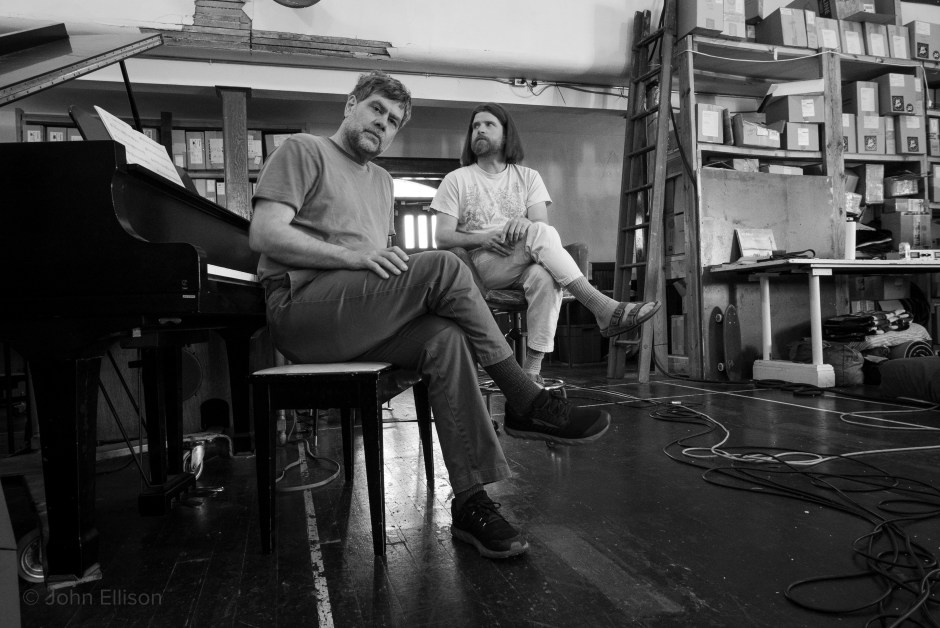
In developing this piece about Eli Moore’s first “official” solo record (more about that tag in a minute), Eli sent me a private link to two embryonic collections of his songs, “Consuming Fire” and “Unreleased Album,” some released, some unreleased, most tracks written and recorded over 20 years ago. When listened to as a single artifact today, these 18 fragile, early experiments in songwriting serve as a revelatory time machine back to the fertile beginning of the band LAKE (formed in 2005 in Olympia, Washington, today composed of three primary collaborators, Eli Moore, Ashley Eriksson, and Andrew Dorsett).
Whether appreciated as the man or the band, what we hear on “The Power Line” (Anything Bagel, 2026), is probably what Eli’s heard in his head his entire life as a recording artist, a mixture of innocence with sophistication, the dreamer with the craftsman’s devotion to dexterity and detail, and the virtuous creative searching for aesthetic fulfillment in an overheated world of performance anxiety.
So, can we take “The Power Line” as Eli’s first solo record? “I would say no,” says Eli about his two early collections and where he is now, so many years later, with the new “solo” LP. “One record was just a CDR and hasn’t been available for probably 15 years. I leaned toward declaring ‘The Power Line’ as my debut solo album, which was pressed in a plant on all formats and is available everywhere online. I’m planning to go back and retroactively release those lost albums.”
I wrote about LAKE here (LAKE: Conjured from a hard-candied world) five years ago, and now after more years of listening to LAKE, and Eli on his own with contributions from the many regular Northwest music outsiders who magically appear in-studio during LAKE recording sessions (LAKE truly contains multitudes), there remains a deep mystery for me in these nine new songs, each with its shimmering sonic surface and easy lyrics that frequently hint of darker themes and mutable landscapes.
Knowing an artist’s interactions with their peers might be more of a reveal than knowing an artist’s influences. “I love making music with other people,” says Eli. “I’m happiest when recording, especially at The Unknown. The togetherness we feel is so life affirming. It always makes me feel very happy to listen to my songs and hear my friends on the recordings. And it always makes me feel closer to my friends when I hear myself in their recordings.”
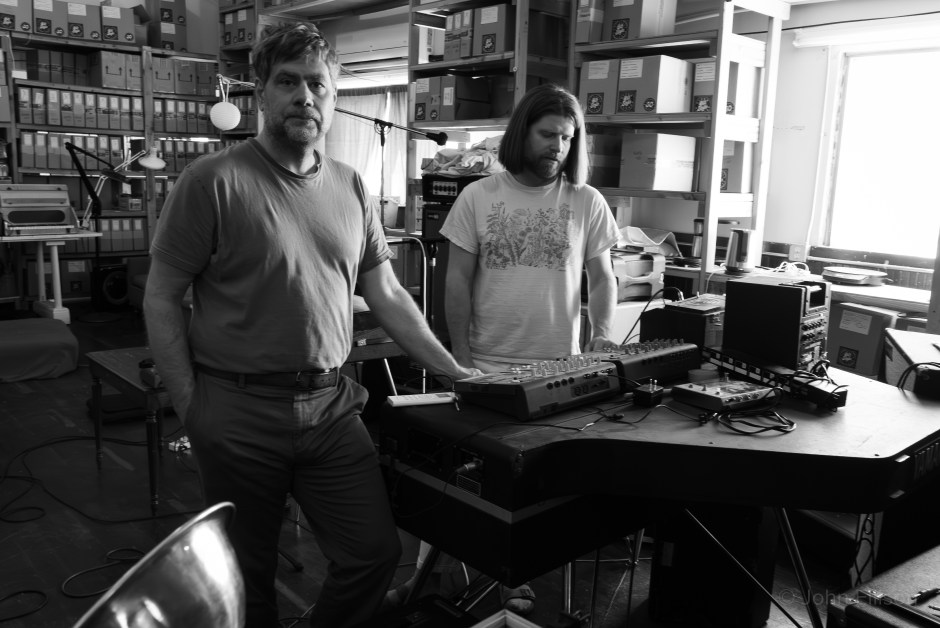
On returning to The Unknown Recording Studio, where LAKE created many of their most memorable tracks as a band (approximately 11 LPs, depending where you start counting), spanning the years 2006 through 2025, with every project Eli renews his ties to his happy place. “Nicholas Wilbur has become such a good friend,” says Eli. “I feel very safe with him — and Paul Benson, from Nich’s band, New Issue. Andrew, from LAKE, is more like a family member at this point.”
My love of folk music started around 1997 when I found a CD box set, the Anthology of American Folk Music, at our local library, just after I graduated from high school. It really blew me away.
Eli Moore
Not hidden but reverential and subtle, both with his band LAKE as well as quietly woven into the fabric of his solo work, you can find Eli’s deep affection for folk music as well as the many artists who made up the folk baroque, progressive folk revival of the 1960s and 1970s. Distracted, perhaps, by the romantic propensity (in a good way) of Eli’s and LAKE’s songwriting, it’s easy to miss the mile markers of these original influencers of their age on “The Power Line.” Eli’s genuine and deliberate version of the ballad, “Geordie,” connects him to 400 years of songwriting tradition. Eli’s style is more a bridge than a full reimagining of these folk traditions, extending heritage through interpretation, blending easily into his latest original songwriting.
“When I went to Evergreen State College, I discovered their vinyl library and spent hours and hours making tapes of Folkways records,” says Eli. Folkways Records was founded by Moses Asch in 1948 to document “the people’s music.” The Smithsonian Institution acquired Folkways in 1987, now called Smithsonian Folkways Recordings, and continues to collect, release, and engage through education while celebrating cultural diversity with its collecting and curating. “In those sessions I also discovered early recordings of British folk music. When I met Ashley she introduced me to Bert Jansch through a cover she recorded of his song, ‘A Dream, a Dream, a Dream.’
“We recorded Jansch’s ‘Tell Me What Is True Love,’ on ‘Roundelay,’ the LAKE album,” says Eli. “I can’t quite remember where I first heard of Shirley Collins.” (Eli’s version of “Geordie,” on “The Power Line,” is traditional based on the version by Shirley Collins, from her 1970 LP, “Love, Death and the Lady,” Harvest Records). “Probably through Ashley or our friend Drew Christie. LAKE did a version of her take on ‘Just as the Tide Was Flowing,’ a cassette-only release in early 2020.” (The Collins version can be found on “The Power of the True Love Knot,” Polydor Records, 1968.)
“I loved learning about how American songs evolved from the British Isles,” says Eli. “Ashley and I, on the day we met, recorded a version of ‘Wagoner’s Lad.’ My first — and currently unavailable — solo album from 2005 has a few old tunes, too — ‘The Two Sisters,’ ‘Fair and Tender Ladies,’ as well as ‘Wagoner’s Lad.’ I love John Martyn, Fairport Convention, Bert Jansch, Richard and Linda Thompson, The Incredible String Band, Nick Drake — all of these artists are very important to me.”

‘Pays to Love’ feels like it’s taking stock of my journey as an artist — the verses anyway — waiting for the big break, or waiting to make something really good like this album, which I kind of waited 20 years to make.
Eli Moore
There’s also a darkness in some of these new solo songs. COVID, the biggest global destabilizing event of this century (so far), impacted everyone and left its legacy even if its name isn’t spoken today. Every generation of artists uses life’s tests and traumas, disappointments and burdens, as well as milestones and victories to calibrate feeling into expression.
“I think there’s a lot of processing the grief and fear that I have,” says Eli. “Having grown up in a very Christian household, believing in things like God and hell and heaven, I still feel those fears and desires deeply. I’ve given up trying to move past that stuff. It’s more important to me to process and come up with an adult conception of these things, and heal the wounded child inside of me.”
For Eli, preparing to be in a place to make a solo record post-pandemic also meant working through a potentially debilitating medical crisis, especially for a recording and performing artist. There’s a pivotal first line in a pivotal song, “Funny Seeds,” on “The Power Line” — “From the shore across the isle of loss.”
“Near the end of COVID I came down with a pretty intense — and permanent — case of tinnitus and hyperacusis,” says Eli, “which threatened my ability to listen to or play music. It was devastating at first. A couple of these songs — ‘The Power Line’ especially — are literally my first attempts at writing. It was such a relief to find out that I could still write with such a huge distraction.
“I actually discovered that writing was one of the cures,” he continues, “in the sense that it distracted me from the constant ringing I hear. I can go entire days without noticing it now and it no longer distresses me unless I’m very tired and upset. Yes, ‘Funny Seeds’ also talks about ‘terrible sounds, ringing in your ear.”
There are also universal, inescapable issues explored throughout this career milestone record, which is what makes these nine songs reverberate with consequence and implication, for the all-embracing human experience. “The song ‘Haunted’ seems to be about aging,” adds Eli, “feeling sad about it, but also trying to find comfort in being part of humanity, and the shared experience we all will have of dying and disappearing from this world.”
That said, Eli’s work isn’t disappearing yet. “I actually want to move backwards and learn more traditional American and British folk songs,” says Eli. “I’ve had a fantasy since I was out of high school of being strictly a folk musician. So maybe that’s the next direction.
“And I’m trying deeply to let go of perfection,” he adds. “I want to learn how to accept the way I sound live, and make more recordings that capture the moment, the performance, and spend less time on production.”
‘Truth is What Feels Good’ started with a dream I had maybe 10 years ago, the melody came from that dream. It stuck around all these years and I just kept coming back to it. It feels like my manifesto. I’m very proud of this song.
Eli Moore
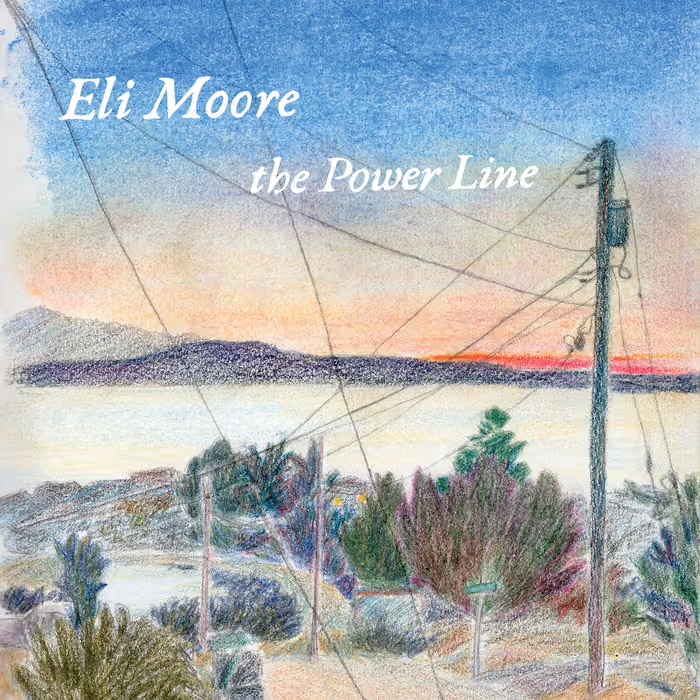
The Power Line (2026)
Track 1: Bow & Arrow
Track 2: The Power Line
Track 3: Salt to Taste
Track 4: Doubtless
Track 5: Haunted
Track 6: Pays to Love
Track 7: Funny Seeds
Track 8: Geordie
Track 9: Truth is What Feels Good
Eli Moore
Credits

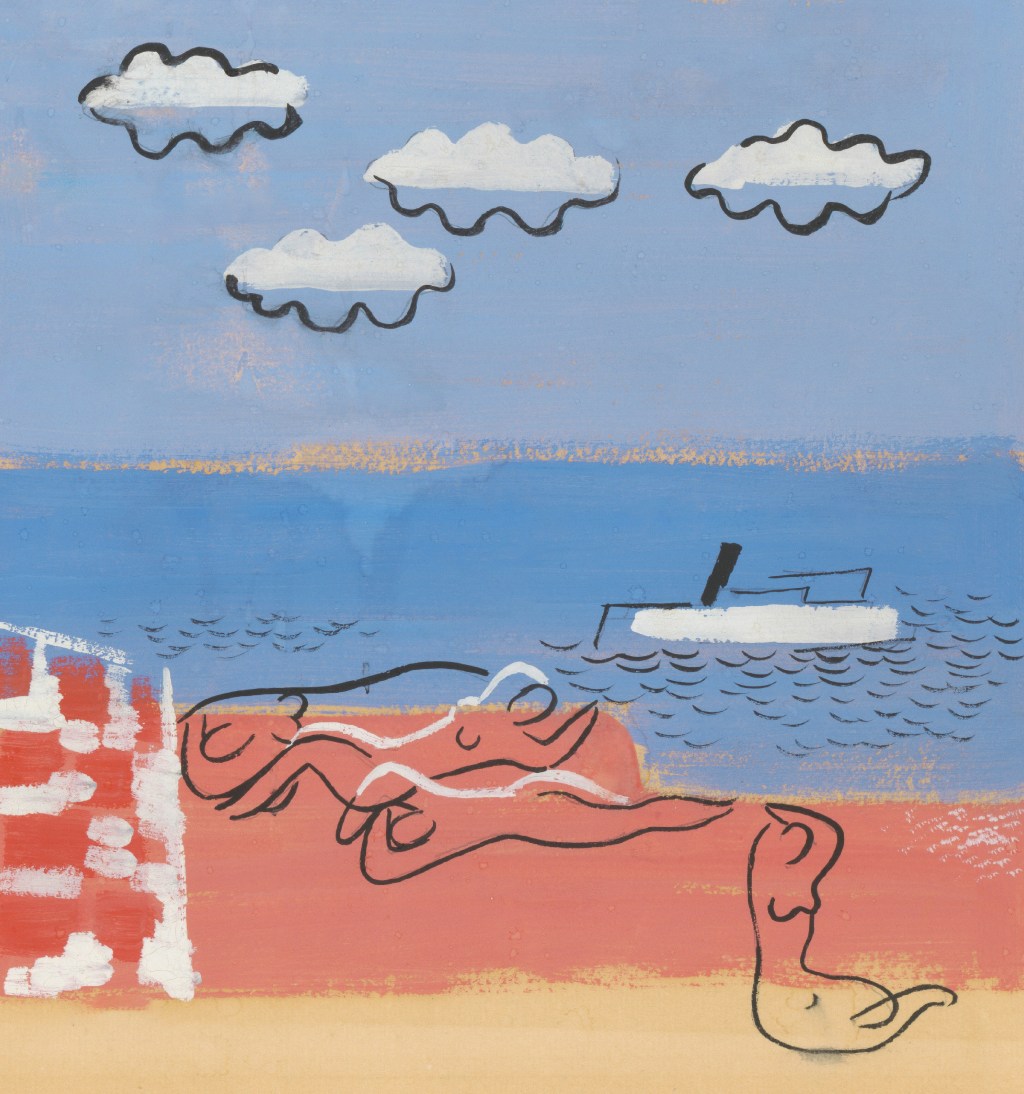
“On a Sea Beach” / Anchor painting by Mikuláš Galanda (1895-1938), Slovak National Gallery, Slovakia, in Public Domain, shared on Europeana, Unsplash.com.
Keep supporting human creativity, musicians, labels, local record shops & one another
The Palace didn’t use AI writing technology to create this post.
NO AI TRAINING: Without in any way limiting the author’s exclusive rights under copyright, any use of this publication to “train” generative artificial intelligence (AI) technologies to generate text or images is expressly prohibited. The author reserves all rights to license this work for generative AI training.
Musicians interested in learning more about protecting their hearing, visit the Hearing Health Foundation.
The Palace loves Nick & Evie at The Business, a mighty Indie curated music emporium & distribution titan in Anacortes, Washington. Order Eli Moore’s LP (shipped by The Business), CD, cassette tape, or digital download, all from Bandcamp.

